
Add Row
Add Element
cropper
update
Ai SEO Podcast
update
Add Element
  • Home
  • Categories
    • Lead Generation
    • Ai Content Creation
    • Cast Studies
    • Ai SEO Tools
    • SEO For Beginners
    • SEO TRENDS
    • RANKING WITH AI
    • AI CONTENT STRATEGIES
    • AI SEO NEWS
    • AI SEO Experts
    • Extra News
February 19.2025
3 Minutes Read

Are Stock Prices and Organic Traffic Correlated? Here’s What Investors Must Know!

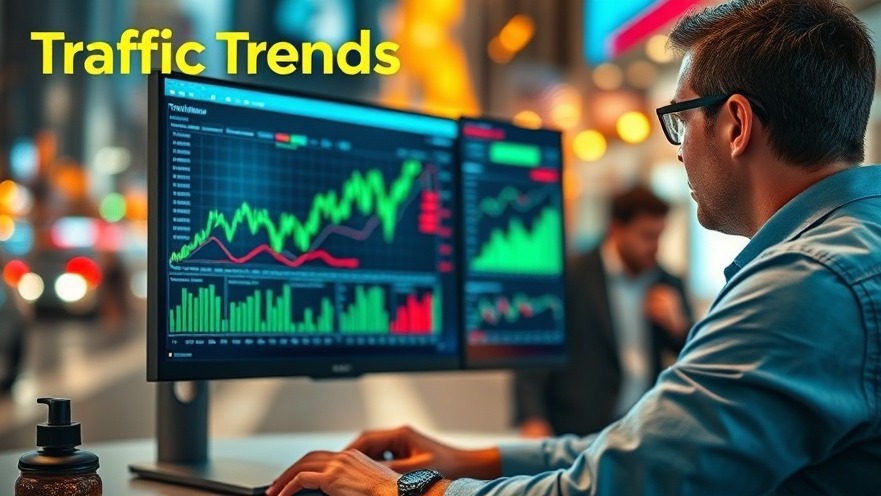
Investor analyzing stock market graphs and SEO impact on stocks in a vibrant cityscape.


Analyzing the Intriguing Connection: Stock Prices and SEO

Have you ever thought that SEO and the stock market operate in completely different realms? Well, it's time to think again! A recent analysis of over 2,000 publicly traded companies revealed a fascinating trend: there is a strong positive correlation between stock prices and organic traffic. But why does this happen, and what implications does it hold for marketers and investors alike?

The Correlation That Matters

The research conducted on Nasdaq listed companies showed that stock prices typically rise alongside total organic traffic. Statistically, 32% of Nasdaq companies with at least 100,000 annual visits displayed a moderate to strong positive correlation between their organic traffic and stock prices. This revelation could significantly change how businesses approach their online marketing strategies.

Understanding the SEO-Stock Price Link

Several factors contribute to this favorable link, especially in sectors like consumer products, healthcare, finance, and real estate, which are already known for strong SEO connectivity. For businesses in these industries, investing in SEO can not only increase online visibility but can also translate into higher stock valuations.

Public Companies: A Unique Advantage

Public companies often enjoy an SEO edge due to their established online presence. Their “entity” status enhances their rankings, making SEO a critical component in maximizing stock market performance. Companies like Nvidia can rank for keywords without even using those exact phrases on their websites. Such visibility offers a competitive advantage that many privately-held firms may lack.

Real-world Examples of SEO Impacting Stock Prices

Exploring real-world instances further emphasizes the strong SEO-stock price correlation. When Expedia's search visibility dipped due to changes in their Google ranking, their stock price followed suit, resulting in a 4% decrease. Such case studies reveal that SEO performance can be an excellent barometer for stock performance, making it essential for marketers and investors to integrate these insights into their strategies.

Investor Insights: Profiting from Organic Traffic

For investors, understanding the correlation between organic traffic and stock market performance opens new avenues for profit. Strategies based on SEO metrics have proven effective for correctly predicting stock price movements, making it essential for savvy investors to monitor SEO data closely. Using branded search volume and sentiment analytics can provide valuable insights for trading decisions.

Challenges and Considerations

However, correlation does not equal causation. It's essential for marketers and investors to understand that while strong correlations exist, other factors can significantly impact stock prices. Changes in business strategies, investor sentiment, and economic conditions all play crucial roles in determining stock value. So, while SEO can serve as a leading indicator, it should be considered alongside comprehensive market analysis.

Embracing SEO Best Practices

To harness the power of SEO effectively, public companies do not necessarily need unique tactics. An effective blend of established SEO strategies can yield substantial organic traffic and enhance stock market performance. Brands such as Airbnb exemplify success through their informative and engaging blogs, which have successfully driven traffic while simultaneously increasing their organic footprint.

Final Thoughts on the SEO-Stock Price Nexus

Companies wield considerable power over their market performance through SEO. The relationship between stock prices and organic traffic highlights the importance of investing in SEO strategies. As the digital landscape continues to evolve, understanding this connection will give companies a competitive edge in the market. It’s clear: SEOs and investors, it’s time to unite your efforts!

In conclusion, understanding the interplay between stock prices and organic traffic could redirect how you view your marketing strategies and investment opportunities. Engage with SEO intelligently, and you might just find yourself riding the wave of stock market success!


AI SEO Experts

Write A Comment

*
*
Related Posts All Posts
12.02.2025

How CMOs Can Leverage AI Marketing Strategy for Success in 2026

Update The Evolution of CMOs in a Tech-Driven LandscapeAs the marketing landscape evolves toward 2026, Chief Marketing Officers (CMOs) find themselves at a critical juncture. With a relentless push for personalization at scale and accountability from boards, the stakes have never been higher. The introduction of advanced AI marketing tools is not merely a trend but a necessity, reinforcing the need for a proactive approach in selecting the right technology to drive measurable results.Strategic Priorities for 2026: What CMOs Must Focus OnLooking ahead, CMOs will prioritize three core areas: measurable ROI, agility, and deep personalization. Stakeholders demand quantifiable links between marketing activities and business growth. Marketing agility will become paramount as market conditions shift quickly, necessitating swift campaign adaptations. Importantly, personalization powered by AI will become critical in delivering relevant messages without overwhelming marketing teams.Aligning MarTech with Business ObjectivesNo longer can marketing technology be viewed merely as operational tools; it must align with organizational aspirations. Platforms like Robotic Marketer shift expectations regarding speed and accuracy in executing data-driven strategies. This evolution redefines the role of CMOs, who must now choose tools not just for performance but for their ability to guide actions and illuminate growth pathways.A Glimpse at AI Marketing Strategy PlatformsAI marketing strategy platforms will emerge as integral components of modern marketing initiatives, offering predictive analytics and automated content generation that fuels campaign performance. CMOs can anticipate solutions that automatically adjust based on real-time metrics, significantly enhancing sales-marketing alignment and overall campaign efficiency.Marketing Automation: Paving the Way for Intelligent Campaign ToolsThe maturity of marketing automation will see tools that facilitate seamless audience segmentation and campaign optimization. AI capabilities will recommend campaign variations and optimize budgets using real-time analytics, drastically reducing time-to-market and resource strain.Personalization at Scale: The Future of Customer EngagementThe dream of delivering personalized experiences at scale is now achievable thanks to AI. By analyzing customer behavior and preferences, advanced tools will automate the curation of tailored content that resonates with individual shoppers, moving beyond the basic “Hi [First Name]” approach. This shift will be crucial as consumers demand more from their interactions with brands.The Ethical Considerations of AI in MarketingWhile advancements in AI present opportunities, they also pose ethical questions around data privacy. Marketers must ensure compliance with regulations such as GDPR while building trust with customers through transparent data practices. A thoughtful approach to ethical AI use will be vital for maintaining brand integrity in an increasingly digital landscape.Driving Growth and Innovation: What Lies Ahead for CMOsThe role of CMOs will morph from campaign operators to architects of growth. Through successful integration of AI-driven insights, marketing departments will become key players in driving organizational transformation. As automation takes over repetitive tasks, CMOs will have the capacity to focus on strategy, creativity, and crafting compelling narratives that resonate emotionally with audiences, thus enhancing brand loyalty.In conclusion, as we approach 2026, CMOs must embrace AI not just as an enhancement but as a foundational element of marketing strategy. The paramount question remains: How proactively can they integrate these innovative tools to ensure sustainable success?

11.27.2025

How Intelligent Automation Will Transform Email Marketing by 2026

Update Revolutionizing Email Marketing: Why 2026 Demands Change Email marketing remains a vital strategy for businesses to reach their customers effectively. However, as we approach 2026, the marketing landscape is evolving rapidly, necessitating a shift in how businesses employ this tool. The emergence of automation and artificial intelligence (AI) in email marketing is transforming traditional methods into more engaging, targeted, and efficient approaches that resonate with advanced consumer expectations. Understanding the Shortcomings of Traditional Email Marketing The existing email marketing platforms that dominated the previous decade can no longer keep pace with consumer demands. These legacy systems often relied on mass outreach tactics, delivering generic content that failed to leverage data effectively. Marketers were limited to broad demographic segmentation and basic engagement metrics, offering little insight into user behavior or preferences. With inboxes overflowing and attention spans dwindling, consumers have grown wary of one-size-fits-all emails that lack personalization. A report from Omnisend reveals that more than 40% of email-driven revenue arises from automated messages, emphasizing the necessity for businesses to adapt quickly to modern techniques. The automated approach ensures that pertinent messages reach the right consumers at pivotal moments in their journey. The Rise of Intelligent Automation in Email Marketing Modern marketing automation tools have moved beyond mere scheduling and segmentation, integrating machine learning and AI to enhance every stage of the email lifecycle. These platforms can interpret vast datasets to deliver nuanced insights, thus aiding marketers in determining the optimal timing, content, and format for their emails. For instance, tools like ActiveCampaign are tailored to create highly responsive campaigns that adapt in real-time, based on user interaction. Moreover, these AI-driven systems empower businesses to refine their email strategies without the hassle of repetitive manual tasks. By automating tedious processes, teams can focus on crafting compelling content and connecting with audiences more personally. The Game-Changer: Dynamic Personalization A prominent trend in email marketing as we approach 2026 is the emphasis on dynamic personalization. Instead of relying on broad segments, innovative platforms are capable of customizing email content for each recipient using real-time data. This method allows brands to adjust product recommendations and content layouts based on the consumer's behavior, significantly improving engagement and conversion rates. The integration of tools like Omnisend simultaneously with SMS marketing and web push notifications promises a more cohesive customer experience that is adaptable in real-time, bridging gaps left by traditional emails. Keep in mind that automations based on user behavior can achieve up to six times the engagement rate compared to conventional campaigns. Understanding the Tools Behind Successful Email Marketing Selecting the right automation tool can make all the difference in email marketing success. User-friendly options like Mailchimp provide intuitive platforms that enable marketers to seamlessly manage multi-channel campaigns. In contrast, advanced systems like Zapier support the creation of complex workflows that consolidate marketing efforts into a unified system. Every business must evaluate its specific requirements: Are you looking for straightforward, scalable solutions? Or do you need robust tools designed for sophisticated marketing initiatives? Tools like Omnisend cater specifically to eCommerce brands enabling essential strategies like abandoned cart emails that generate substantial revenues. Common tools to consider in 2026 include: ActiveCampaign: Known for its advanced drip automation. Zapier: Offers extensive integrations to build custom workflows. Mailchimp: A holistic platform to manage email, social, and SMS marketing. Omnisend: Tailored for eCommerce, focusing on comprehensive customer journeys with cross-channel marketing. MailerLite: Great for SMBs with excellent usability and automation functionalities. Future of Email Marketing: Trends and Predictions As we transition deeper into the 2020s, email marketing continues to morph into a more interactive, contextual battlefield. The integration of AI is only one part of the equation. Consumers increasingly expect their interactions to drive personalized recommendations, responsive communication, and engagement that reflects their unique lifestyles and preferences. This is more than just a trend; it is a crucial survival strategy for brands competing to capture attention and trust in an oversaturated digital space. Marketers need to open the channels of communication, not just through emails but across multiple platforms, ensuring robust and relevant messaging regardless of the medium. Conclusion: Embracing a New Era of Email Marketing In the rapidly evolving landscape of email marketing, adopting intelligent automation and dynamic personalization is no longer an option but a necessity. As we move towards 2026, those who manage to implement these modern solutions effectively will enhance customer engagement and ultimately drive significant growth in their businesses. By harnessing the power of advanced analytics, AI-driven personalization, and comprehensive marketing automation tools, brands can navigate the complexities of the digital age and build lasting relationships with their audiences. To explore how you can elevate your email marketing strategy with automation and personalization, consider leveraging tools that align with your business needs and goals. Embrace these changes proactively to ensure your brand stands out and thrives in the competitive landscape.

11.20.2025

Unlock Business Growth: How to Monitor Your YouTube Video Mentions

Update The Importance of Monitoring Your YouTube Mentions YouTube is more than just a platform for cat videos; it’s a global hub for conversation and brand influence. With users spending an average of 50 minutes daily on the platform, neglecting to monitor what is being said about your brand there is a missed opportunity. As the second-largest search engine, YouTube mentions can significantly shape how potential customers perceive your brand. Brands need to pay attention—the conversion window is shorter than ever in this fast-paced digital age. Understanding YouTube Mentions There are two types of YouTube mentions that businesses should keep track of—tagged and untagged. Tagged mentions occur when a creator intentionally links to your channel in their content, while untagged mentions are less direct references to your brand that don’t link back to you. Monitoring both types is essential to build a complete understanding of your brand’s presence on this influential platform. Key Benefits of Monitoring YouTube Mentions Tracking your brand mentions on YouTube provides valuable insights that can help steer your marketing strategies. For instance, a spike in mentions could correlate with increased search volume or social engagement for your product. Regularly keeping an eye on these metrics allows you to: Measure Brand Buzz: You can see patterns of how often your brand is discussed, helping gauge overall brand health. Assess Campaign Impact: Comparing social mentions with campaign launches can quantify your marketing efforts’ ROI. Identify Breakout Moments: Understanding what drives spikes in conversation can inform future brand initiatives. Tool Spotlight: Brand Radar’s YouTube Monitoring System To keep track of untagged mentions and other metrics, tools like Brand Radar provide an effective solution. This system scans approximately 15 million videos, offering a comprehensive overview of your branding presence. By analyzing titles, descriptions, and transcripts, you're not only able to respond to conversations about your brand but also refine your strategies to enhance brand perception. Practical Steps for Monitoring Your Brand For brand managers and online marketers, understanding how to monitor and analyze YouTube mentions can feel daunting. Here are a few straightforward strategies: Set Up Alerts: Utilize tools like Google Alerts to stay informed about real-time mentions of your brand on YouTube, ensuring you never miss critical feedback. Engage with Your Audience: Actively respond to comments and videos mentioning your brand. This not only improves your brand image but can also cultivate a loyal community. Utilize Analytics: YouTube Analytics can track viewer behavior on your own videos. By learning where audiences drop off, brands can adapt their content strategy accordingly. Future Trends: Why Monitoring is a Must The digital landscape is evolving rapidly, and brands that fail to adapt may be left behind. A study by Sprout Social found that 65% of marketers noted social listening is crucial for staying ahead of the curve. In an age where AI influences consumer behaviors, monitoring conversations on platforms like YouTube is pivotal for brand longevity. As we look to the future, brands will need to not just track mentions but analyze them for deeper insights and proactive measures. The brands that will thrive are those who embrace the technology available and engage meaningfully with their audience. By systematically monitoring YourTube video mentions, you'll not only protect your brand's reputation but also contribute to its growth in a way that resonates with today's consumers. Conclusion Don’t find yourself questioning why your competitors are outpacing you on YouTube. Start monitoring your mentions today—it’s not just a digital task; it’s an investment in your brand's reputation and future success. So, why wait? Dive into brand monitoring and unlock the potential of conversations happening about your brand right now.

Terms of Service

Privacy Policy

Core Modal Title

Sorry, no results found

You Might Find These Articles Interesting

T
Please Check Your Email
We Will Be Following Up Shortly
*
*
*