
Add Row
Add Element
cropper
update
Ai SEO Podcast
update
Add Element
  • Home
  • Categories
    • Lead Generation
    • Ai Content Creation
    • Cast Studies
    • Ai SEO Tools
    • SEO For Beginners
    • SEO TRENDS
    • RANKING WITH AI
    • AI CONTENT STRATEGIES
    • AI SEO NEWS
    • AI SEO Experts
    • Extra News
June 03.2025
3 Minutes Read

The Great Decoupling of Google Search: What Clicks vs Impressions Means for Marketers

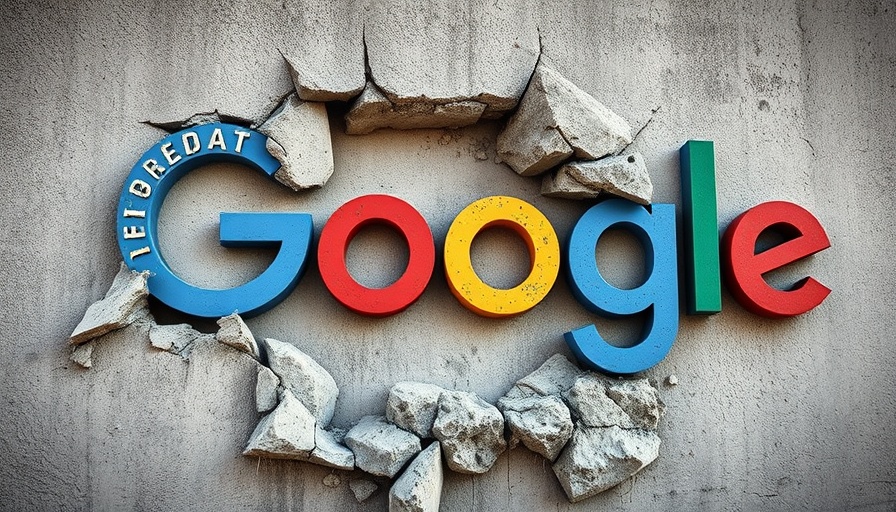
Google logo breaking through concrete, highlighting search changes.

The Shift in Google's Search Dynamics: Understanding the Decoupling

In the ever-evolving landscape of online marketing, the advent of AI technologies in search engines has initiated a significant shift—termed ‘The Great Decoupling.’ This phenomenon, observed by many in the digital marketing community, illustrates a troubling trend where Google Search is now generating a high number of impressions but a noticeably lower click-through rate (CTR).

With the recent rollout of AI Overviews on Google Search, many site owners and marketers are experiencing a disconnect. Impressions, which reflect how often a page appears in search results, continue to surge, yet actual clicks plummet. The result? A puzzling scenario where businesses see their visibility grow without realizing the expected growth in traffic.

Why Is This Happening? Let's Dive Deeper

The explanation for this shocking disparity revolves around the nature of AI Overviews themselves. As Google melds its capacity to present information more efficiently through AI, users often find answers directly in the search results, negating the need to click through to websites. This new approach promises convenience, but for marketers and business owners, it represents a seismic shift in how traffic is generated and, ultimately, how revenue is realized.

Statistical Insights: Understanding the Content Quality Impact

Recent statistics from industry studies reaffirm the depth of this issue. Reports indicate that the click-through rates have decreased across multiple industries, particularly for informational queries where Google synthesizes answers rather than directing users to external resources. As Larry Engel pointed out in a recent LinkedIn post, the visual representation of performance metrics from Google Search Console is alarming. Charts share a story of decreasing clicks contrasted with stable or rising impressions, marking the unnatural trajectory of search performance.

Future Predictions: Navigating the New Search Paradigm

Looking forward, what does this mean for small business owners and marketers? Adapting to this ‘new normal’ is imperative. Businesses that rely heavily on search traffic must rethink their marketing strategies. With impressions soaring yet clicks dwindling, there’s a pressing need to enhance on-page content quality, create compelling calls-to-action, and employ engaging, relevant multimedia to potentially convert those impressions into clicks.

Future trends suggest that SEO strategies must evolve alongside these technological changes. Leveraging advanced AI SEO tools can help businesses create personalized content that captivates users and entices them to click. As the search engine landscape transforms, those who stay ahead of the curve and adapt proactively will stand to benefit immensely.

Emotional Insights: The Marketer's Dilemma

This situation creates not only a strategic challenge but an emotional one for marketers and small business owners. It raises concerns about their effectiveness and market presence. The feeling of investing time and resources in SEO, only to see diminishing returns, can be disheartening. It prompts a need for resilience—the understanding that in a landscape driven by algorithms and AI, adaptability and learning are key to longevity.

Actionable Insights: Optimize for AI and Engage Users

To thrive amidst The Great Decoupling, here are actionable strategies for business owners and marketers to consider:

  • Enhance Content Relevance: Prioritize creating high-quality, engaging content that fulfills user intent and is optimized for snippets to capture attention.
  • Embrace AI Tools: Utilize AI-driven SEO tools to analyze user behavior and optimize page performance for better engagement.
  • Focus on User Experience: Ensure that your website is easy to navigate, mobile-friendly, and fast, which contributes to retaining visitor interest once they do land on your page.
Understanding and navigating the complexities of modern search behavior is essential for any business aiming to succeed in the digital space.

As we witness this industry transformation, it becomes crucial for everyone involved to adapt strategies accordingly, embracing the power of AI while enhancing emotional intelligence in their marketing efforts. If these insights resonate with you, take the initiative to implement changes that engage your target market more effectively! Be proactive—it’s the only way to ensure your business thrives in the future of search.

AI SEO Experts

0 Comments

Write A Comment

*
*
Related Posts All Posts
02.23.2026

Why Automation is Essential for Recruitment Agencies in Australia by 2026

Update Recruitment Agencies at the Crossroads: The Need for Automation As we look toward 2026, recruitment agencies in Australia find themselves grappling with a rapidly changing landscape characterized by global talent movements and evolving jobseeker attitudes. Traditional recruitment methods, once deemed effective, now face scrutiny as they struggle to keep pace with the demands of a digital-first generation of candidates. For these agencies, the decision to automate their marketing operations is no longer a choice but a necessity for survival and growth. The Limits of Manual Recruitment Marketing Historically, recruitment marketing in Australia has leaned heavily on manual practices for candidate engagement, campaign execution, and data management. This hands-on approach sufficed during times when recruitment was simpler and talent was abundant. However, in today's competitive environment, agencies are finding that administrative burdens significantly hinder their agility. Repetitive tasks, such as data entry and follow-up communications, consume valuable hours that could be better spent connecting with potential candidates and clients. As detailed in recent insights, the reality is that these outdated workflows not only limit productivity but also diminish the employer brand's resonance in a crowded market. Why Recruitment Agencies Must Embrace Automation Automation presents a multifaceted solution to the challenges faced by recruitment firms in Australia. By integrating automated workflows, agencies can streamline operations, enhance candidate nurturing, and significantly reduce time to hire. For instance, automated candidate screenings eliminate the tedious task of sifting through resumes, allowing recruiters to focus on high-value conversations and negotiations. The benefits extend beyond operational efficiency; agencies leveraging automation can deliver timely and personalized experiences to both candidates and clients, raising their profiles amidst competitors in regions like Sydney and Melbourne. The Cost of Inefficiency in Recruitment The financial implications of manual hiring processes are often underappreciated. Beyond basic costs such as advertising and wages, the true cost encompasses lost productivity and candidate dissatisfaction due to inefficient processes. Agencies failing to adapt risk straining their profit margins while becoming vulnerable to competitors who embrace automated solutions. A recent study highlights that firms implementing effective marketing automation strategies report reduced costs per hire—a critical metric in maintaining profitability. Focusing on Targeted Recruitment SEO In an era where online presence can make or break an agency, adopting a robust recruitment SEO Australia strategy is imperative. Agencies must optimize their websites for specific industry niches like technology or healthcare, thereby improving their visibility in relevant searches. This targeted approach, combined with data-driven content marketing strategies enabled by automation, positions agencies to attract high-quality leads and enhance their overall talent acquisition efforts. The employment landscape in cities like Melbourne indicates that agencies that leverage localized SEO strategies not only increase traffic but also improve conversion rates significantly. Enhancing Employer Branding through Automation Employer branding is increasingly critical in attracting talent, especially from a generation that values transparency and engagement from potential employers. Marketing automation tools facilitate the consistent delivery of branded content across multiple channels, creating a cohesive narrative that resonates with candidates. This integration not only fosters trust between candidates and agencies but also elevates the agency's profile in the eyes of clients. By automating the distribution of employer branding content, agencies can maintain visibility and appeal in a vibrant recruitment market while capturing the attention of passive candidates. Leveraging AI in Recruitment Marketing Artificial Intelligence (AI) has begun to redefine how recruitment agencies approach candidate acquisition and client engagement. Through the application of machine learning algorithms, agencies can analyze candidate data more effectively, tailoring marketing efforts to meet the nuanced needs of diverse candidate pools. AI tools can predict candidate behavior, optimize job descriptions for search performance, and even facilitate chatbots for instant communication. Embracing these technologies not only augments marketing tactics but also supports agencies in making informed decisions based on real-time insights. Conclusion: Preparing for the Future of Recruitment As recruitment agencies look to the near future, the imperative to automate becomes ever clearer. The integration of advanced marketing technologies will not only streamline workflows but will also enhance agency visibility and competitiveness. Those who adapt to these changes will be better positioned to thrive, ensuring that they capture the best talent available while meeting the demands of their client base. In a world driven by digital engagement, adapting to automation is the key to successful recruitment marketing in Australia.

02.19.2026

Unleashing the Power of AI: Transform Your Marketing Strategy Today

Update Revolutionizing Marketing: The AI Advantage The landscape of marketing is undergoing a seismic shift as artificial intelligence (AI) emerges as a game-changing tool for professionals across sectors. The potential of AI to transform how businesses develop strategies is no longer a distant future; it's a table-stakes requirement. As organizations clash with the demands of an increasingly competitive market, AI-driven solutions are proving vital in designing, executing, and measuring effective marketing strategies with unprecedented speed and efficacy. Understanding the Shift to AI-Driven Marketing The modern marketer faces increasing pressure to move swiftly and decisively. Traditional approaches to creating marketing plans are insufficient in today's fast-paced business environment. AI technology helps streamline processes by automating data collection and analysis—facilitating a more precise approach. By eliminating human error and providing insights derived from extensive data scraping, AI enhances the decision-making process while yielding a better return on marketing investments. Immediate Implementation: A Paradigm Shift in Planning With AI Marketing Strategy platforms, the days of laboriously compiling marketing plans are over. Businesses can leverage algorithms to develop personalized marketing blueprints that align closely with their goals. This dramatic transformation allows for rapid identification of opportunities and quick mitigation of risks, ultimately accelerating strategy implementation without long lead times. The Competitive Edge for Leaders AI isn’t merely a trend; it's an essential tool for leaders seeking agility and clarity in their marketing initiatives. C-suite executives gain from quick and actionable plans that align with real-time market data, while budget-conscious managers appreciate the efficiency of AI tools that minimize resource allocation toward planning. This integration fosters improved cross-departmental communication and shared objectives, an essential feature for modern organizations. Leveraging Marketing Audits for Future Growth Assessing current strategies is crucial for sustainable growth. Conducting AI-assisted Marketing Audits provides immediate and unbiased insights into existing campaigns, highlighting inefficiencies and outdated methodologies. Such audits pave the way for more intelligent and proactive strategies that can quickly adapt to changing market dynamics. Connecting Strategy and Execution A strategic plan alone is insufficient. Marketing Execution Services are vital for rolling out initiatives smoothly and effectively. AI enables real-time monitoring of campaign performances and adjustments to messaging, thus reducing the risks associated with traditional execution delays. With these tools, companies can guarantee timely project delivery and improved ROI visibility. Future Predictions: The Implications of AI in Marketing As AI continues to evolve, business leaders must anticipate its future implications. The shift away from linear sales funnels toward dynamic, data-driven models necessitates not only an understanding of AI but also ethical considerations in its deployment. A culture focused on transparency and accountability will be crucial in leveraging AI potential effectively and responsibly. Strategies for Embracing AI Effectively Organizations at every level must prepare for AI’s transformative impact by upskilling their teams and adopting frameworks that integrate AI seamlessly. This holistic approach ensures that companies not only enhance productivity but retain the vital aspect of human creativity essential in marketing. As we look forward, embracing AI-driven marketing will be integral for any organization attempting to survive and thrive in an increasingly competitive digital marketplace. The key takeaway? The best time to refine your AI-enhanced marketing strategy is now—so seize the opportunity and lead the way in this evolving landscape.

02.10.2026

Understanding AI and Marketing Ethics: Balancing Efficiency with Responsibility

Update The Ethics of Automated Decision-Making in Marketing The integration of artificial intelligence (AI) into marketing strategies has revolutionized how brands engage with consumers. AI's ability to analyze massive data sets enables precise personalization, allowing companies to tailor messages to individual preferences, habits, and behaviors. However, this remarkable power raises pivotal ethical questions surrounding responsibility, privacy, and fairness. These considerations are no longer reserved for specialists; they resonate with every consumer, as businesses employ AI tools that can shape purchasing decisions at scale. Navigating the Pressure of Automation Modern marketing automation allows brands to respond to consumer behavior in real-time, enhancing the customer experience significantly. Yet, this immediacy brings about pressure on marketing teams to exploit every possible data point for optimization. As teams use advanced AI platforms to craft personalized messages, allocate budgets, and manage leads, the ethical dilemma shifts from whether something can be done to whether it should be done in a specific context. As such, the balance of efficiency and ethical responsibility becomes increasingly vital. Consent and Data Privacy Issues The backbone of effective AI marketing is data, yet many consumers remain unaware of the extent to which their information is collected and utilized. Ethical marketing necessitates transparent communication regarding data usage, ensuring that consent evolves from a one-time checkbox to an ongoing dialogue about consumer preferences. Marketers need to prioritize clarity in their data practices, providing consumers with simple choices to opt out of non-essential data uses, reinforcing a relationship built on trust. Algorithmic Bias: Understanding and Mitigating Risks AI algorithms, often trained on historical data, can unintentionally perpetuate biases embedded within that data. This leads to unfair advantages for some groups while marginalizing others. Marketing teams must routinely review and audit their AI systems to identify instances of discrimination and ensure equitable outcomes across diverse demographics. Proactive measures might include utilizing diverse datasets and regularly updating algorithms to reflect current social contexts rather than outdated norms. Frameworks for Ethical AI Implementation Establishing ethical guardrails for automated marketing decisions is paramount. Companies can adopt frameworks such as Responsible AI and Ethical AI, which emphasize principles like accountability and transparency. By integrating ethical scrutiny into AI marketing practices, organizations not only foster consumer trust but also generate long-term business value by avoiding potential regulatory violations and reputational harm. Acknowledging the Boundaries: From Manipulation to Ethical Persuasion The line between persuasion and manipulation is particularly nuanced in the realm of AI marketing. Marketers find themselves in a position where AI can exploit psychological insights to drive consumer decisions; however, such tactics raise crucial ethical concerns. Ethical marketing focuses on empowering consumer agency—providing useful, contextually relevant information that encourages informed choices while refraining from utilizing manipulative practices that may exploit vulnerabilities. Future Directions: Collaborating for Ethical Standards As AI technologies evolve, the marketing landscape will experience an increasing convergence of innovation and ethical practice. Collaborating with industry stakeholders to create shared ethical standards will play a critical role in establishing a sustainable path forward. Embracing new technologies, such as explainable AI and privacy-preserving techniques, can mitigate risks and enhance transparency, fostering consumer trust in automated decisions. Organizations that commit to ethical AI practices go beyond mere compliance; they create a competitive edge that aligns with evolving consumer expectations. As sentiment around data privacy and ethics grows, thriving in the marketplace will mean embedding ethical considerations into the very fabric of AI marketing strategies.

Terms of Service

Privacy Policy

Core Modal Title

Sorry, no results found

You Might Find These Articles Interesting

T
Please Check Your Email
We Will Be Following Up Shortly
*
*
*