
Add Row
Add Element
cropper
update
Ai SEO Podcast
update
Add Element
  • Home
  • Categories
    • Lead Generation
    • Ai Content Creation
    • Cast Studies
    • Ai SEO Tools
    • SEO For Beginners
    • SEO TRENDS
    • RANKING WITH AI
    • AI CONTENT STRATEGIES
    • AI SEO NEWS
    • AI SEO Experts
    • Extra News
September 06.2025
3 Minutes Read

EU Fines Google $3.5 Billion: What This Means For Small Businesses and Marketers

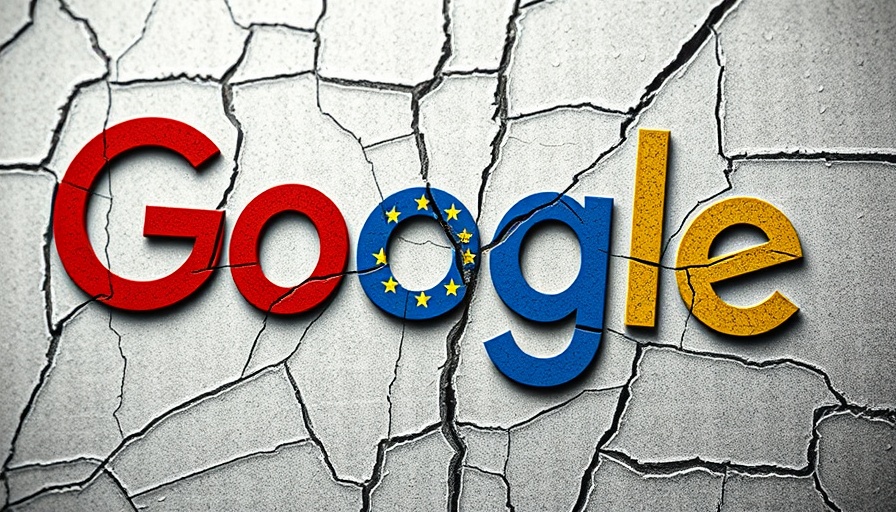
Google and EU logo cracked, symbolizing conflict. EU fines Google $3.5 billion.

The EU's Landmark Decision: What It Means for Small Businesses

The recent €2.95 billion fine levied against Google by the European Union signals a turning point not just in antitrust regulations but in how small businesses and marketers operate in the digital landscape. This ruling, coupled with the stipulation that Google must divest part of its advertising technology business, introduces a new variable in the advertising ecosystem where many rely on Google’s platforms. As EU competition chief Teresa Ribera indicated, changes need to address existing conflicts of interest, but these changes may also reshape how small businesses interact with various advertising channels.

Deciphering ‘Self-Preferencing’ in Digital Ads

The concept of “self-preferencing” in the digital advertising space means that Google has favored its own services over competitors, making it harder for small businesses to compete. For marketers and small business owners, understanding this term is crucial. It highlights how platforms can manipulate visibility and access based on business interests rather than merit. This ruling exposes the ingrained structures that can stymie smaller players through limited visibility, pushing them to find creative ways to market themselves—be it through shifts to alternative platforms or optimizing for organic search results against a backdrop of paid ads.

Historical Context: A Pattern of Antitrust Action

This isn't Google’s first rodeo with antitrust laws; it's actually the fourth major antitrust penalty it has faced from the EU, following previous fines related to its Android practices and AdSense. Each case compounds the concern surrounding the monopoly-like hold Google has over online advertising. For marketers, this history serves as a reminder of how critical it is to diversify advertising strategies in an evolving landscape. Just as Google faced backlash, so too do companies need to be vigilant of where they place their advertising, recognizing that reliance on a single platform can present significant risks.

The Ripple Effect: Implications for Digital Marketing Strategies

With the potential shift in Google's ad-tech structure, small businesses will need to recalibrate their marketing efforts. This ruling might make advertising more accessible for some by reducing Google’s overwhelming influence. However, it also calls for small business owners to think strategically about how best to allocate their resources. Marketers may need to explore innovative marketing channels—such as social media platforms, email marketing strategies, or local SEO best practices—to engage audiences directly without getting drowned out by larger corporations.

The Future of AI in Marketing

As Google undergoes scrutiny and potential restructuring, the integration of AI tools into marketing practices stands to become more pivotal than ever. Tools leveraging AI can help small businesses optimize their marketing efforts by analyzing consumer behavior, personalizing ad experiences, and automating repetitive tasks. Adopting AI-driven strategies can create efficiencies, giving businesses the competitive edge needed to thrive in a transforming marketplace. Embracing technology transparently may also allow smaller brands to craft compelling narratives that resonate more effectively with their target audiences.

Final Thoughts: A Call to Adapt and Innovate

For small businesses and marketers, the landscape is shifting. The latest EU ruling against Google demonstrates that prevailing power dynamics are beginning to change, and adaptability will be key. As you reevaluate your marketing strategies, consider the emerging tools and technologies at your disposal. Embrace AI-driven solutions as a means to enhance efficiency and connectivity with your audience. It’s not just about surviving amidst regulatory changes but thriving in a landscape where innovation and adaptability are paramount.

AI SEO NEWS

Write A Comment

*
*
Related Posts All Posts
12.05.2025

Navigating Google Search Volatility: Insights on AI Mode's Impact for Marketers

Update Understanding Google Search's Evolving Landscape: AI Mode Takes Center Stage In a week marked by significant developments, Google Search continues to innovate, showcasing its adaptation to the evolving digital landscape. This week, the spotlight is on the rising Google Search Volatility and the introduction of AI Mode—a powerful tool that is changing the way both users and marketers engage with search. As small business owners, marketers, and agencies navigate these changes, understanding the implications of these updates is crucial for maintaining competitive advantage. Google’s Daring Leap into AI Mode Google's integration of AI Mode directly into search results heralds a shift that cannot be ignored. Users are now met with AI-generated overviews, which facilitate a seamless transition to interactive queries. The innovations don't stop there: the new AI-powered configuration tool in the Search Console aims to streamline reporting for users. By allowing SEO professionals to describe their desired metrics and generate reports quickly, Google is introducing efficiencies that could aid performance tracking. The Double-Edged Sword of Search Console Updates One of the updates gaining traction is the AI-powered configuration in the Google Search Console, which is particularly valuable for those repeatedly generating similar reports. Being able to describe a report in one sentence could save significant time for SEO experts. However, as noted by industry professionals, this feature requires user verification, leaving room for potential misinterpretations—an important reminder that automation does not replace thorough understanding. Potential Impact of AI on Organic Traffic The introduction of AI Mode necessitates deeper introspection about its effects on organic traffic. According to industry insights, users engaging with AI Mode queries may receive comprehensive responses without needing to click through to individual web pages, presenting challenges for traditional traffic models. As a marketer, this could mean reevaluating the way we approach content visibility and conversion. Competition and Cooperation: The Role of Ads in Search As Google's AI innovations advance, the question of ad placements within this new framework arises. The addition of Google Ads data into AI interactions emphasizes the importance of remaining visible to users who are increasingly engaging directly with AI-generated content. Keeping pace with these trends can help businesses not just adapt, but thrive. Future Predictions: Navigating the New Norm What does the future hold? As Google continues its evolution, the integration of AI-driven tools is likely to expand. The focus may shift from mere visibility in search results to engaging effectively with AI interfaces. For marketers and small business owners, embracing AI tools and developing strategies tailored to this interactive format will be essential for sustaining growth and relevance in an increasingly competitive environment. Behind the Scenes: Celebrating Milestones in Search This week also marks a personal milestone, celebrating 22 years of covering the search industry—a testament to resilience and adaptation. As we look back, it’s clear that the only constant in this field is change. It's a powerful reminder for all in the industry that staying informed and adaptable is key to success. Conclusion: Embrace the Future of Search For those involved in digital marketing, particularly small business owners and agencies, the message is clear: embracing AI tools and adapting marketing strategies to align with evolving search functionalities is critical. As Google continues to refine its AI capabilities, it’s vital to ensure that your online presence aligns with these developments. The future of search is here—are you ready to harness its potential?

12.05.2025

AI-Powered Search Console: Transforming Marketing for Small Businesses

Update Embracing AI: A Game-Changer for Small Businesses and Marketers The digital marketing landscape is evolving rapidly, and small business owners, marketers, and agencies must embrace these changes or risk being left behind. The emergence of AI-powered tools in Google Search Console is not merely a technological advance; it represents a democratization of analytics that enables even those with minimal technical expertise to glean insights from their data. What’s New in Google Search Console? On December 5, 2025, Google announced an innovative AI-powered configuration tool that will transform how users interact with the Search Console Performance Report. Rather than manually selecting filters, users can type natural language queries, and the AI interprets their requests to generate the appropriate filters automatically. Imagine asking, "Show me clicks for mobile traffic in the last six months"—the AI understands this and configures the report on your behalf. This feature promises to streamline the reporting process significantly, reducing the manual effort previously required to extract the desired analysis. The Implications of AI in Analytics As Google's AI assistant becomes more widespread, the expectations of users will shift. Currently, this tool is available only to a limited test group, allowing a maximum of 20 requests per day. However, if implemented successfully, it could become the norm across Google's analytics platforms. For small business owners, this means a potential decrease in the reliance on SEO professionals for routine report generation, leading to a more competitive landscape. As highlighted in recent discussions, this shift brings both opportunities and challenges. While it simplifies data extraction, it could commodify the technical skills that SEO experts usually rely upon. The value proposition for these professionals will need to pivot from data extraction to offering strategic insight and interpretation of the results. The Role of AI in Marketing Strategies AI is not just a tool for efficiency; it's becoming central to marketing strategies. Small business owners who leverage AI tools can better understand customer behavior, optimize their marketing funnels, and create tailored campaigns that resonate with their target audience. For example, marketers can utilize insights gained from AI-generated reports to make data-driven decisions, optimize website content, and innovate customer engagement tactics. The market is already witnessing a surge in discussions about AI's capacity to reshape consumer behavior. As marketers and business owners rethink their strategies, they'll find themselves on a unified front with consumers who demand more personalized interactions. Preparing for Future Trends in SEO and Analytics The integration of AI tools in Google Search Console isn't just a unique feature; it signals a broader trend that all small business owners and marketers should watch closely. The trajectory indicates that natural language processing will influence various facets of online marketing, from campaign planning to performance analysis. Understanding and anticipating these trends will be crucial. For instance, businesses that invest in training team members to leverage these AI tools will gain a competitive edge over those who resist changing their approaches. Furthermore, as AI improves, it will learn from user interactions, potentially leading to more accurate and nuanced analytics. This adaptability can empower small businesses to respond swiftly to market shifts. Leveraging Insights for Actionable Strategies To thrive in this evolving environment, business owners need to focus on actionable insights from AI tools rather than merely seeking data. Questions such as "What does this increase in website traffic mean for my business model?", or "How can I use this data to enhance customer loyalty?" will dictate the success of their online strategies. By aligning their business objectives with the new capabilities AI offers, small business owners can transition from passive data consumption to proactive strategy implementation. Final Thoughts The future of digital marketing hinges on adaptation and foresight. With Google’s AI-powered configuration tool ushering in a new era of accessibility in analytics, small business owners and marketers alike must refine their value proposition. Instead of being solely data gatherers, they should position themselves as strategic partners equipped to interpret insights and drive business growth. As AI redefines the parameters of marketing analytics, those who harness its potential will undoubtedly lead the charge into a more efficient, data-driven business landscape. For those eager to continue their journey into these trends and embrace the future of AI in marketing, exploring educational resources and communities focused on the intersection of AI and online marketing will be enormously fruitful. The next wave of innovation is upon us—are you ready to ride it?

12.05.2025

Transform Your Marketing Strategy: Learn from Top AEO & GEO Campaigns of 2025

Update Revolutionizing Visibility in an AI-Dominated Search Landscape As artificial intelligence (AI) continues to shape how consumers discover brands, companies must adapt their marketing strategies to enhance visibility in search results. What was once reliant solely on traditional SEO is now intertwined with new trends in AI-driven search visibility. The stakes are especially high for small business owners and marketers, as real buying decisions increasingly begin within the answers generated by advanced AI models like ChatGPT and Gemini. Understanding the Shift: From SEO to AEO The shift from traditional search engine optimization (SEO) to answer engine optimization (AEO) and generative engine optimization (GEO) underscores the need for businesses to compete beyond Google’s search results. AEO focuses on ensuring that brands earn citations and trust within AI-generated content, whereas GEO deals with local search visibility tailored for AI interpretations. In light of this, the campaigns highlighted in our review illuminate how leading agencies are thriving in this evolving landscape. Case Study Insights: Simplified SEO Consulting's Striking Results One standout example is the campaign conducted by Simplified SEO Consulting, which saw a remarkable rise from one ranking keyword to a total of 23 within just three months. The challenge lay in optimizing a website built on HighLevel, a platform noted for its limited SEO capabilities. The innovative strategies that emerged—layering AEO and GEO techniques—included creating user-driven content to meet the demands of AI search mechanisms. Resulting in over 7,316 impressions and climbing visibility points exceeding 800, this campaign serves as a prime example of how small businesses can overcome inherent platform limitations using targeted, strategic approaches to content and site structure. By successfully implementing user-centric, question-based content, they reinforced both local and semantic visibility, ultimately translating this triumph into tangible results in the hyper-competitive market of therapy services in Phoenix. Netpeak USA: Harnessing AI for E-commerce Triumphs Another notable campaign was executed by Netpeak USA, which resulted in a staggering 120% revenue increase driven by AI traffic. By focusing on a specialized e-commerce platform that sold water supply and drainage equipment, the company discovered that product descriptions tailored for AI-driven queries yielded significant traffic and conversion rates. With AI visitors converting at a 5% rate—exceeding the 4% average from organic searches—this strategic pivot to understanding conversational intents proved crucial in tailoring product descriptions that resonated with AI algorithms. This case not only emphasizes the importance of AI-driven strategies but also illustrates how businesses can take advantage of emerging digital trends for revenue growth and customer engagement. Future Predictions: Adapting to New Consumer Behaviors The landscape of digital marketing continues to evolve at a rapid pace. Looking into the future, marketers must develop flexible strategies that prioritize AI visibility—an area that will only become more integral as AI technologies advance. Expect to see a growing emphasis on building content that provides direct answers to consumer inquiries, along with optimization tactics that cater explicitly to AI's evolving understanding. The Unique Value of Embracing AI in Marketing For small business owners and marketers, understanding these shifts can inform actionable marketing decisions. By embracing AI-driven SEO strategies, businesses can not only enhance visibility but also connect more effectively with their target audience. Investing in AEO and GEO approaches can elevate a brand’s presence in a crowded marketplace, paving the way for sustained success. Conclusion: Join the AI-Driven Marketing Movement As AI reshapes the digital landscape, it is imperative for marketers and small business owners alike to adapt and innovate. Embracing emerging frameworks around AEO and GEO can position businesses for long-term visibility and success. Now's the time to consider what these insights mean for your brand and how you can become part of the AI-driven marketing movement.

Terms of Service

Privacy Policy

Core Modal Title

Sorry, no results found

You Might Find These Articles Interesting

T
Please Check Your Email
We Will Be Following Up Shortly
*
*
*